A plastic-free solution for better tasting tap water.
Activated by heat, not chemicals
Miyabi Bamboo charcoal is safe in your water and your compost bin.
Tap water, made drinkable.
Tap water impurities - like chloramine, the chemical that gives it that swimming pool flavor - adhere to the porous surface of bamboo charcoal. Lab tests also show that bamboo charcoal adsorbs pesticides and other contaminants picked up from old pipes. Over time, the charcoal slowly releases trace minerals like magnesium and calcium, softening the water — many people notice it tastes sweeter.
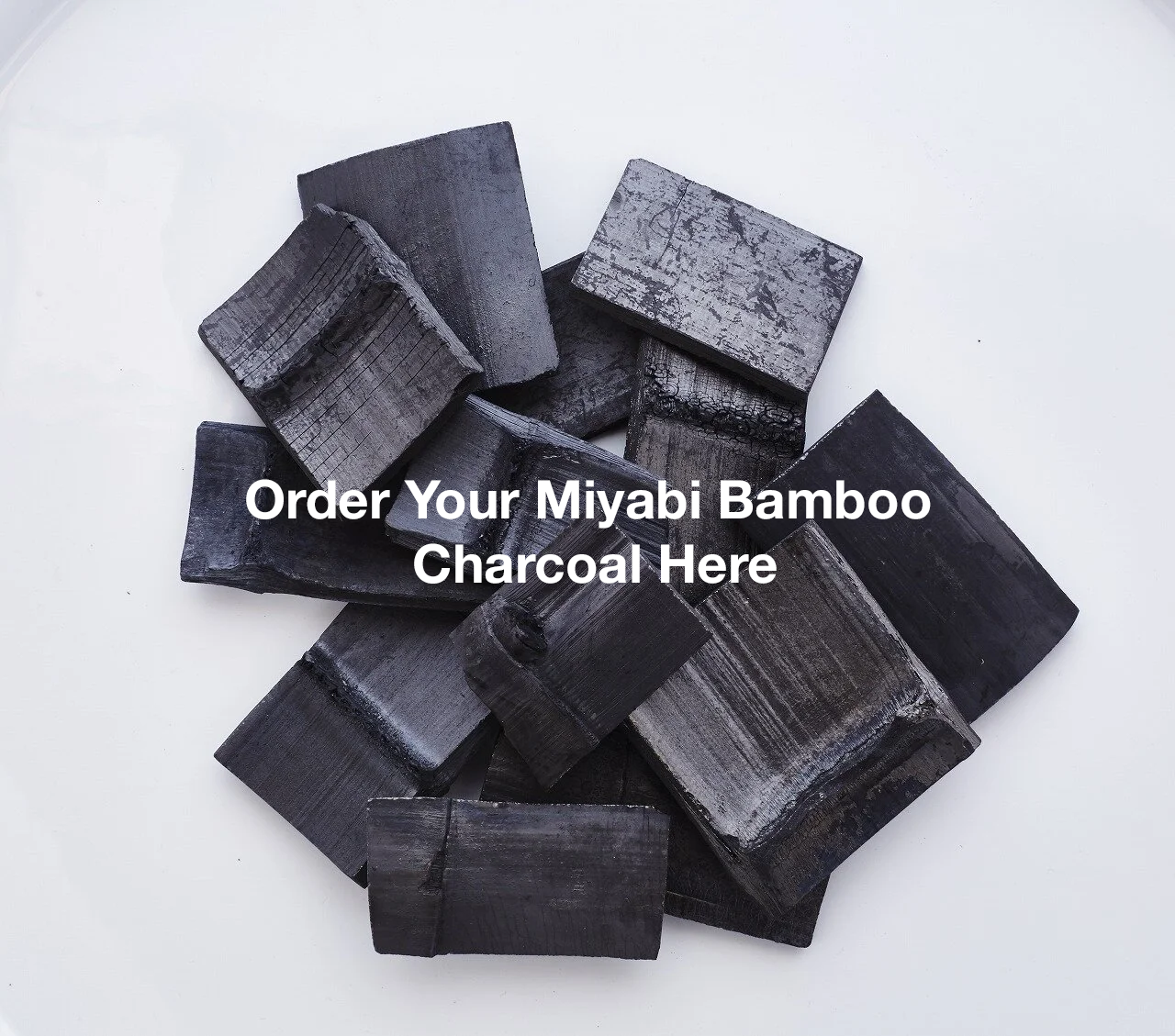
Click On Image To Order Yours Now
How to use

1.
Rinse 3 pieces of charcoal for one liter of water.

2.
Boil the pieces for 5 minutes.

3.
Allow to dry—preferably in the sun.

4.
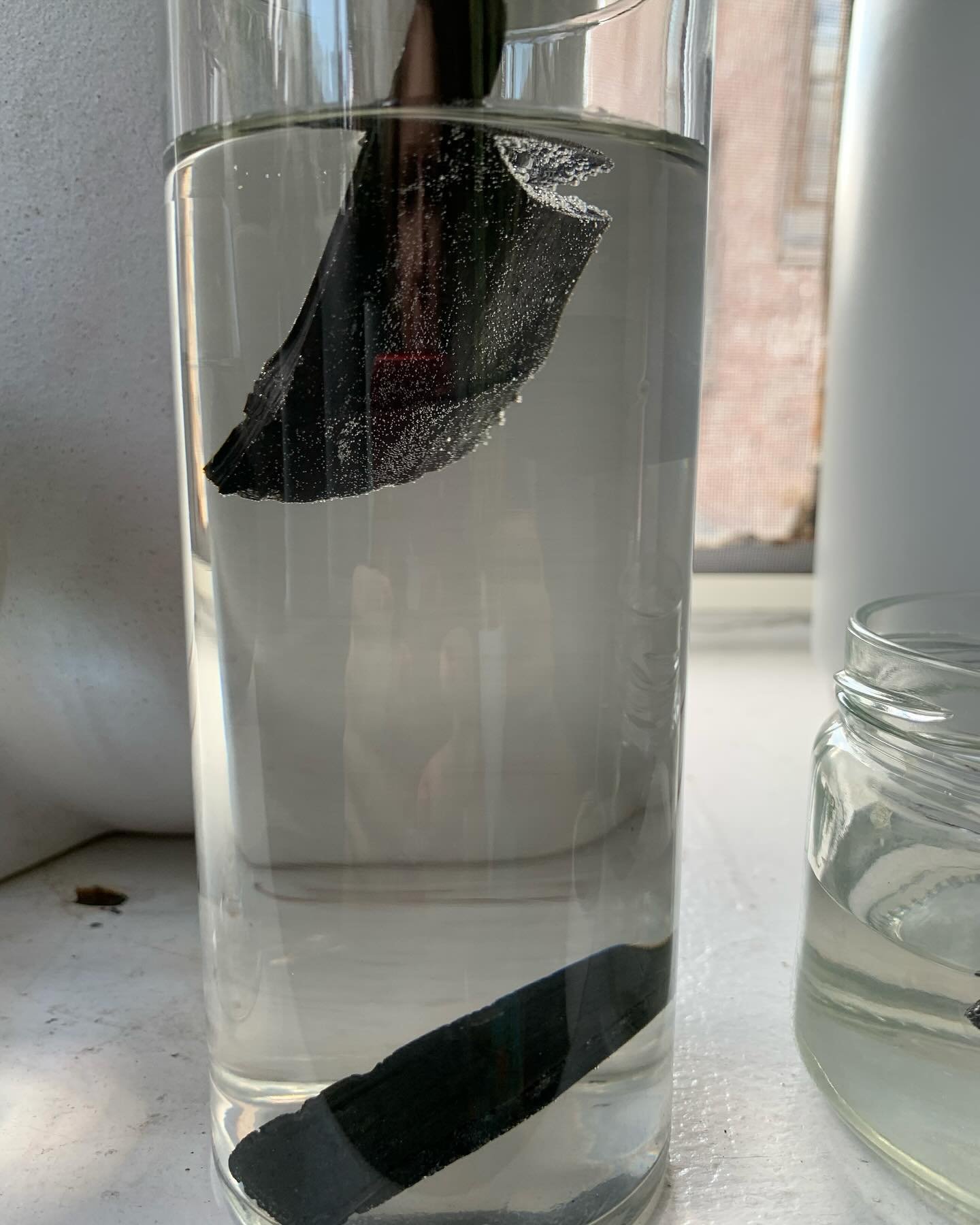
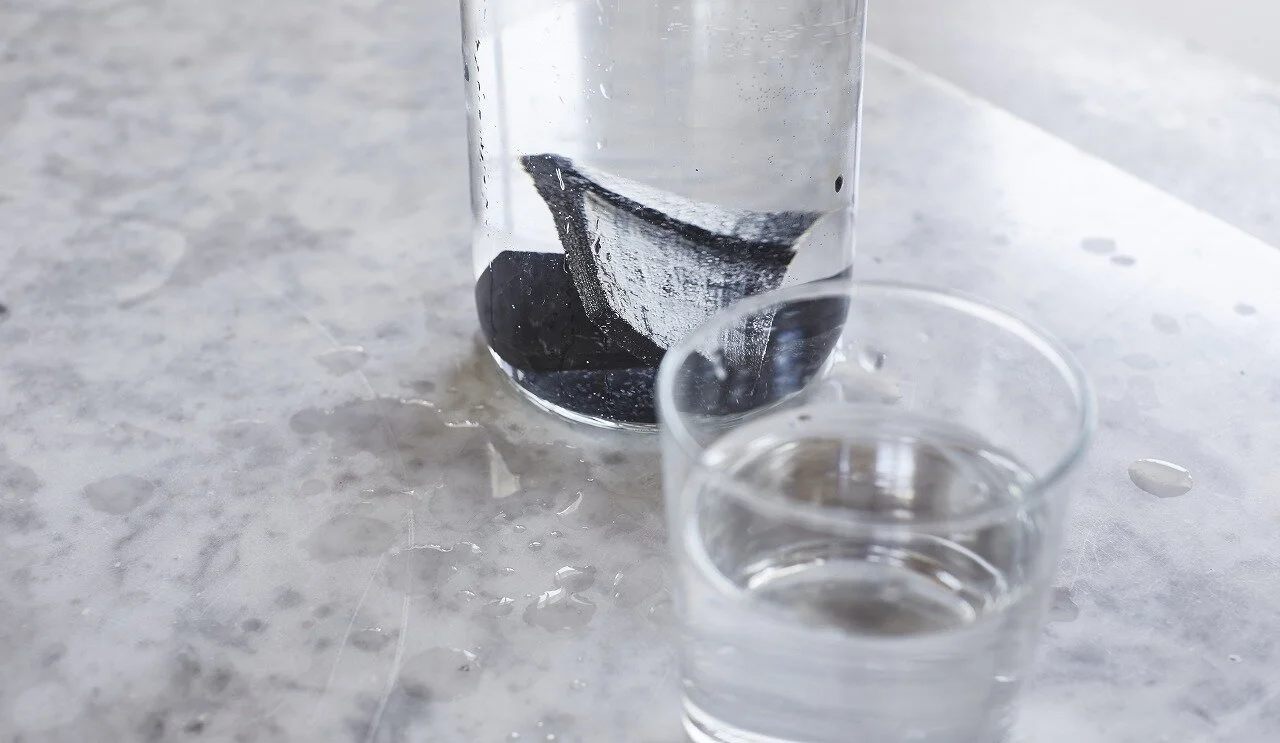
Fill pitcher / bottle / decanter /canteen with tap water.

5.
Allow bamboo charcoal 1 hour to take effect.

6.
Refill the container as needed for up to 4 weeks.
NO LANDFILL!

No Plastic Packaging:
Miyabi Bamboo Charcoal packaging is plastic-free, using recycled and reused paper packaging.

Compost:
When the charcoal is spent, add it to your compost. It reduces odor, provides habitat for beneficial microbes, and breaks down naturally into the soil. Nothing wasted.

Gardening:
Crushed and mixed into soil, bamboo charcoal becomes biochar — a soil amendment used in traditional agriculture for centuries. It holds water, provides habitat for soil microbes, and helps plants thrive.
Bamboo charcoal for air purification
Rinse charcoal with water and dry before use. If the smell-absorbing effect diminishes, please rinse and dry the charcoal again. The effect lasts 3 to 5 months. If the effect of charcoal is completely gone, you can use it for compost or gardening.

A few pieces in a small bowl. Adsorbs odors and helps fruits and vegetables last longer.

A handful of pieces tucked into a corner. Adsorbs odors and humidity..

A small bowl by the sink or in the corner. Adsorbs odors and humidity.

A small bowl near the litter box or crate. Adsorbs odors.

One or two pieces in each shoe overnight. Adsorbs odors.

A small dish under the seat or in the cup holder. Adsorbs odors and dampness.
FAQs
-
Three pieces per liter (about 4 cups) of water, refreshed every four weeks.
Tap water varies from town to town, and some contaminants have a stronger taste signature than others. Chloramine is one of the most noticeable — when the swimming-pool flavor returns, it's a good sign your charcoal is reaching capacity. But other contaminants like pesticides have no taste at all, so taste alone isn't a complete test.
That's why we recommend replacing your bamboo charcoal every four weeks. When it's spent, it goes into your compost or garden — not the trash.
-
Actually, Miyabi bamboo charcoal doesn't remove impurities. It adsorbs them.
When bamboo is carbonized at high heat, the resulting charcoal becomes deeply porous — about 300 square meters of surface area in a single gram. Contaminants in tap water don't disappear; they adhere to that surface. The water you pour from the pitcher is what's left after the charcoal has done its work.
Tests show that bamboo charcoal carbonized at high heat adsorbs chlorine, ammonia, chloramine (the ammonia-chlorine compound municipalities add to kill pathogens), toluene, and pesticides that can leach in from old pipes.
Bamboo charcoal does not adsorb pathogens like bacteria or viruses, so it shouldn't be used to treat untreated water — creek water on a hike, for example.
A 2004 study by the Division of Forest Management in Kagoshima Prefecture, Japan, identified 800°C as the optimal carbonizing temperature for both maximum VOC adsorption and reduced residual chlorine. The study also found that water purified with bamboo charcoal carbonized at this temperature shifts from slightly acidic to alkaline.
Miyabi Bamboo Charcoal is carbonized at 800°C.
-
Yes — it slowly releases trace minerals.
As bamboo charcoal adsorbs contaminants, it also releases small amounts of the minerals it contains naturally: magnesium, calcium, potassium, and silicon. Many people notice the water tastes sweeter over time.
This is one reason to use bamboo charcoal alongside a home filtration system, if you have one. Reverse osmosis removes nearly everything from water, including beneficial minerals — adding charcoal to the finished water restores a small amount of them.
You may see fine black sediment in your pitcher from time to time. That's the charcoal itself, not a contaminant, and it's harmless. Rinse the pieces and continue using them.
-
Yes — but activated by heat alone, not chemicals.
"Activated charcoal" simply means charcoal that has been processed to maximize its porous surface area. There are two ways to do this. Most commercial activated charcoal is treated with chemicals (often phosphoric acid or zinc chloride) that etch away the material to create porosity. It's cheaper to produce and works at lower temperatures.
The traditional method is high heat alone — no chemicals. Miyabi Bamboo Charcoal is carbonized at 800°C in a Japanese mountain kiln, the temperature identified by lab studies as optimal for adsorbing chlorine, chloramine, and VOCs.
The difference matters for two reasons. First, chemically activated charcoal can carry residue from the activation process. Heat-activated charcoal does not. Second, chemically activated charcoal cannot be safely composted at the end of its life. Miyabi can — and should.
-
Both work well — we chose bamboo for sustainability.
Binchotan is a traditional Japanese charcoal made from ubame oak. Like bamboo charcoal, it can effectively adsorb impurities from tap water when carbonized at high temperatures (around 800°C).
We chose bamboo for two reasons. First, it grows much faster than oak — a stand of bamboo regenerates in three to five years, where oak takes decades. Second, the bamboo we use is already a byproduct. In the Japanese countryside, bamboo must be regularly culled to keep it from overtaking native forests. Turning that culled bamboo into charcoal puts a waste material to use.
Ubame oak has been in decline in recent years, and binchotan is increasingly made from other hardwoods. Bamboo charcoal sidesteps that pressure entirely.
Try our new product line-ups. Bamboo Charcoal for Air Purification. Bamboo Charcoal has many small micro holes that effectively remove moisture, ammonia, formaldehyde, and hydrogen sulfide. Add to your washroom, refrigerator, car…